Saturday, December 1, 2012

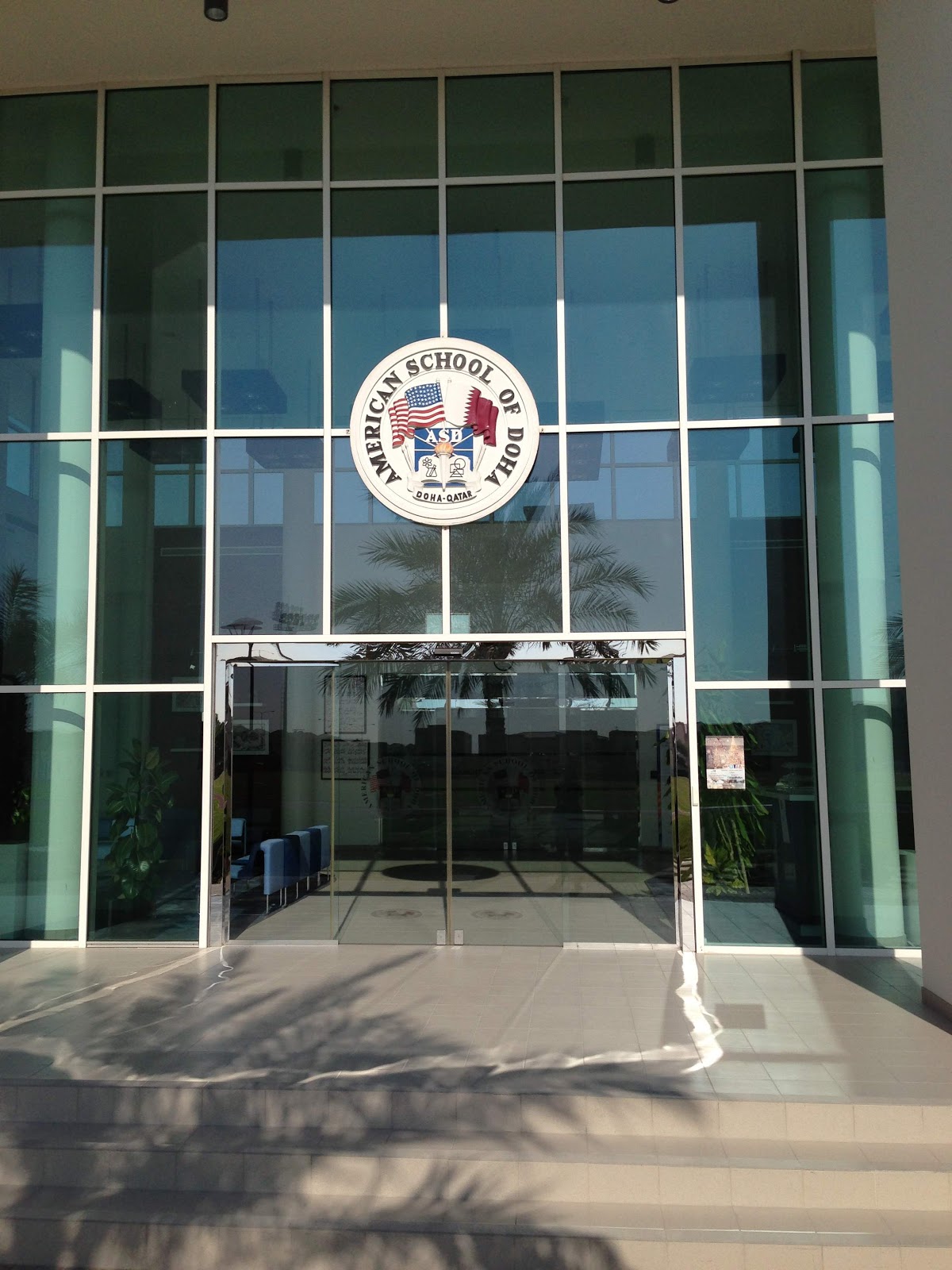
The American School of Doha


The American School of Doha is an amazing school, with a commitment to students and high quality education that is evident everywhere you look.  The students, staff, and community have been tremendous hosts to the SES members of the SESEF delegation and we look forward to another tremendous week of experiences at COP18 with our new partners and friends at ASD.


Another COP 18 blog worth following!


Georgia is doing double duty at COP18, both blogging for our SESEF site and keeping her own personal blog about her experiences at the Conference.  Check out her blog at:

www.georgiaCOP18.blogspot.com

Friday, November 30, 2012

Mobility- The Unification of the Public Transportation Sector & Socializing with the Colombian Delegation

In order to get us to meet important people during the conference we came up with the idea of the "Pink Badge Challenge". This consists in introducing ourselves to a Party member of any delegation. At the COP, "Party" is another word for "Country", and official country delegates can be identified by the pink border on their name tag. For Cale and I, it was Lela; she was a representative from the Turkish delegation. From her we learned how Parties distribute their assets in the sector where they have an area of expertise. The completion the pink badge challenge gave us the opportunity to receive a drawing from Lela, one of the Mexican negotiators. Even though this drawing came from a moment of boredom, it captured one of the few delegates that took the time to participate in the side events, as well as the official negotiations. The delegate portrayed Mexico's intention to reduce CO2 emissions by unifying the public transport: tramways, trains, bicycles, planes, and cars, into a unified grid. This means that pedestrians have access to public bicycles; those bicycles have access to public buses, trains or tramways; and those modes of transportation lead to other transportation systems like airports or shipping ports. This integration will allow civilization to communally transport themselves efficiently.

A contributor to the issue pointed out that, "Our journey starts by walking". If we form our priorities to this process of thinking we should be able to reduce our CO2 emissions by significant quantities. Unifying all contributors to the public transportation sector will allow society to function more smoothly and more cleanly, and this will not only contribute to the mitigation of the climate issue, but it will also affect the people's lifestyle and health quality. Belgium had the initiative to create a car sharing system,"Cambio", in order to significantly reduce the private transport CO2 emission rate; "ONE car will substitute the use of NINE cars in today's transportation grid system". Intercommunicating transportation systems will allow citizens to ride their bikes to work and transport their bikes on their buses through the bus systems as well as the train/metro network. Furthermore, some of the energy used to power the public transport sector can be imputed back into the grid and "recycled" to lessen the demand for the production energy through fossil fuels.


In another note, Thursday 29th became a very eventful day as I met, talked, and experienced first hand how the Colombian delegation (my own country) negotiated their interests in the main hall. Afterwards, I talked to Isabel Cavelier Adarve, a negotiator herself, and we agreed to a follow up meeting with the NGO and the South American delegates, today at 1pm (+3 GMT). Isabel is the Adviser of Environmental Affairs in the Economic, Social and Environmental Affairs Office. We will see how the meetings go today and we will keep you posted Minnesota!

Simon Velasquez Morales

Thursday, November 29, 2012

A Look at Nuclear Energy


The second day attending COP18 I talked to a representative from Hungary. He was involved in the IAEA (International Atomic Energy Agency) and told me a little about the process and benefits of nuclear energy. In the future nuclear energy could be a big player in the effort to reduce greenhouse gases, while also fulfilling current global energy needs. Nuclear energy is the third most CO2 efficient energy source behind hydroelectric power and wind power. A majority of climate scientists agree that we must reduce our greenhouse gas emissions 50%-85% by 2050 in order to avoid major ecological impacts. According to the IAEA, nuclear energy could account for about 15% of total greenhouse gas emission reductions from electricity generation by 2050. The IPCC (International Panel of Climate Change) has estimated that nuclear power has the lowest cost and greatest greenhouse gas reduction potential in power generation.  Not only would nuclear energy lessen the amount of coal that is burned, but it could also provide a more efficient way      to burn coal. While producing energy the heat from the nuclear reactors could be used for the gasification of  coal.

Nuclear fission also produces virtually no air pollution, however it does produce nuclear waste. This is where the real controversy can be found. The waste from nuclear fission remains radioactive for at least 100,000 years. Ways must be found to either detoxify it or find a safe and secure place to store it.
In Olkiluoto, Finland, they are in the process of constructing the world's first permanent nuclear waste repository. Sweden has received the necessary permits and authorization, but waiting for approval on their building plans. These repositories have specific building requirements that ensure safety, security, and accessibility in the future. The waste from nuclear fission contains 7%-9% of its original potential energy, unfortunately there is no way to recover or use this beneficially. One day it could turn into a resource rather than just waste. This radioactive waste won’t be going anywhere for 100,000 years, and it is believed that would be more than enough time to find some way to detoxify or utilize it.

REDD+ And Indigenous Peoples


One of the most difficult climate change mitigation policies to pass is called REDD+. REDD stands for reducing emissions from deforestation and forest degradation in developing countries, with the "plus" representing the broadened scope of REDD which was the result of agreements made at COP16 in Cancun, Mexico. In this post I will give a brief history of REDD, current REDD initiatives, issues surrounding the policy, the role of Indigenous People in REDD+, and why the interests of Indigenous People are so important to this policy.

The idea for REDD was first introduced by the Coalition for Rainforest Nations at COP11 in 2005. Five years later REDD finally became part of the agreements at COP16 in Cancun. Originally REDD was designed to pay forest owners who prevent deforestation and thus help reduce atmospheric carbon. In Cancun they broadened the scope of REDD to include both actions that prevent emissions and actions that increase the removal of carbon from the atmosphere, in other words conservation and sustainable management of forests. With this revision the term "REDD+" was coined. Another aspect of REDD+ that must be mentioned is the inclusion of environmental and social safeguards. These are meant to ensure the rights of indigenous people and ensure that no forest be destroyed due to any REDD agreement. The Cancun agreement touches on these issues but nothing is set in stone, and therein lies the issue.

During my experience observing REDD+ presentations it has been evident that indigenous peoples have the highest interest in REDD discussions.  This stems from the fact that they have the most at stake in issues surrounding deforestation. Many questions I have heard from indigenous people ask how it will possible to battle the massive amounts of money that timber and agriculture companies have. They feel that the battle is almost hopeless at the moment because no policy exists to protect indigenous rights. The current REDD policy discusses indigenous rights but does not actually do anything to protect them. COICA, an indigenous group representing indigenous peoples from Amazonia, believes that "REDD+ cannot advance without immediate guarantees and conditions for indigenous peoples, such as the recognition of rights to property, to collective legal status, consultation, participation, and free, timely and informed consent; and, moreover these be binding.” Although this is a very brief explanation it provides a solid, relevant background on the issues and controversy surrounding REDD+.

 Currently REDD+ is still being discussed at the international level. Even though nothing about REDD+ is completely set in stone there are still many REDD+ initiatives around the globe. Indigenous groups in the Amazon and South America are currently drawing up REDD+ initiatives but more than likely nothing will begin to happen until indigenous people have territorial recognition and are able to secure their rights. COICA says that “without territories and rights, REDD+ is unworkable”. Essentially at this point if indigenous people are going to adopt any REDD+ policy they will demand self-determination and territorial rights, otherwise as COICA says, REDD+ will be unworkable.


The important information to take away from REDD+ discussions is that indigenous people need to be represented in the decision making process. They have the most at stake and know the most about the areas in which REDD+ will be initiated. Victoria Tauli-Corpuz, the Executive Director of Tebtebba, who is coordinating the efforts of all IPO’s (Indigenous Peoples Organizations) at COP18, said to me that if the indigenous people do not get represented in decision making process they will not let REDD+ policy take place in their ancestral lands.

Wednesday, November 28, 2012

Gender Day- the start of a tradition!


Today I was lucky enough to participate in the first Gender Day of the COP. Gender Day was established by the UNFCCC to encourage gender sensitivity in international climate policies and in the role of women as decision-makers at the COP. Almost every event I attended involved Christiana Figueres, Executive Secretary of the UNFCCC and my new role model. She is a charismatic woman who radiates kindness and humor and is determined to recognize the role and impacts of over 50% of the population (women) on the climate change issue. Gender responsiveness at the COP is not just a matter of equal rights and increasing female participation in the negotiations, but recognizing the unique role of women in climate change mitigation and adaptation. According to Figueres, women are "at the nexus of food, energy, and water". Throughout the day I attended various panel discussions, question & answer sessions, meetings, and speeches by powerful, intelligent women dedicated to establishing a standard of gender responsive decision-making at the COP.
The president of COP18 addressing the panel of women about their role in achieving climate justice

I attended the presentation of Thuto Ya Batho-- Teachings from Our People, a book inspired during last year's conference, COP17 in Durban, South Africa. It's a compilation of stories of women in developing countries adapting to the effects of climate change--for example, enabling food security despite desertification and extreme weather. The speakers included the president of COP18 and prime minister of Qatar H.E. Abdullah bin Hamad Al-Attiyah, former President of Ireland "Momma" Mary Robinson, Executive Secretary of the UNFCCC Christiana Figueres, and president of COP17 Ms. Maite Nkoana-Mashabane. It was filled with energy and was a positive way to start the day because it provided hope and appreciation of the work that women are already doing to adjust to the changing climate, but still encouraged each of us to take responsibility for the planet. The launch of the Thuto Ya Batho Legacy Project was especially significant because the president of the Doha conference is the first male president of the COP in 3 years. The president of COP17, Ms. Maite Nkoana-Mashabane, presented a copy of the book to him in order to symbolize continuing the recognition of the role of women in climate change adaptation strategies. It was satisfying, because it seemed to be a friendly way to hint to the president their expectations of "gender smart" change in policy-making this year in Doha. When the president of COP17 spoke, she got me thinking about the idea that women really shouldn't be viewed as victims of climate change, but as contributors to society in response to it. As Christiana Figueres added, "Women aren't waiting for changes. They aren't waiting for a paradigm shift on climate issues. Women just march in and do what needs to be done."

"Momma" Mary Robinson speaking to the audience about developing a sense of urgency on climate issues
Right now the COP is working on to create a policy that will hopefully be implemented by 2020. A few times during the day I heard "Momma" Mary Robinson make the point that many people think 2020 is already too late, and the way to develop the sense of urgency we need is to make climate issues people-centered, which includes women.  

Panel of women experts on climate and gender
Later on I attended a set of high-level panel discussions of women leaders, gender experts, and climate change experts from around the world, including Alcinda Abreu, the Minister of Coordination of Environmental Affairs of Mozambique. This was my favorite of the gender sessions of today, because I felt an intense sense of community between the women in the panels and the audience. It might have also been due to the fact that they were given a chance to share personal stories and motivations behind their involvement in gender and climate change issues. When asked about her motivation behind her work, Figueres began to cry and said that she was working for her family and every woman seven generations in the future.

Left to right: President of WEDO(Women's Environment and Development Organization) Cate Owren, the Minister of Coordination of Environmental Affairs of Mozambique Alcinda Abreu, Executive Secretary of the UNFCCC Christiana Figueres,  and the former president of Ireland Mary Robinson.

The last session was titled "Gender and Climate: Moving beyond the Rhetoric" and included speaking and a question-answer session with the audience by a panel of women including H.E. Sheikha Mayassa bint Hamad Al-Thani of the royal family of Qatar. Photos were forbidden and there was high security in a ring around the audience, which was the highest level of security I have seen at any session so far. I sat next to two other members of the Al-Thani family, and they were constantly in communication with their guards, the press, and other officials. The women panel had a wonderful series of questions which they took very seriously. Figueres did prompt a few laughs though! Overall, they pushed the idea that we need to move past the theory of gender responsiveness and equality and start acting on it. Mary Robinson said that they will increase and look for gender balance in every subsequent decision of the UNFCCC, and that gender balance will ultimately be in climate change policy as a crosscutting issue on all areas of the UNFCCC.

It has been an absolutely wonderful day, and I hope women and gender activists reading this feel hopeful and empowered.

-Georgia

First Impression of COP18

When I first walked into the Qatar National Convention Center(QNCC) I had an idea in my mind on how the conference would be. I imagined formal meetings with delegates speeding around, chatting up their collegues. I envisioned a very distinct and rigid atmosphere. This image quickly dissolved as I experienced the conference.
The SESEF delegates walking at the front of the center.


Georgia and I in the center.
The QNCC is massive. There are meetings and presentations going on everywhere throughout the center. The first area I managed to stumble upon was the US Center, hidden in a back corner of the QNCC. Here I watched a presentation by NASA entitled, "Looking Back and Looking Down". This presentation touched on many different climate issues, focusing on the data collected by NASA satellites. The presentation was accompanied by fantastic HD graphics on the Hyperwall, which was a group of 9 TV's arrayed into one large screen. Overall the presentation provided a solid background in climate science as a foundation for the next two weeks.

One of many meeting rooms at the Qatar National Convention Center

One of our delegates, Georgia, getting interviewed near the kiosks.
The QNCC has a few very large halls, some of which are split up into meeting rooms and exhibition halls. One of these rooms is filled with hundreds of kiosks that represent all the different constituencies, interest groups, and organizations at COP18. This is my favorite area in the QNCC because it represents the diversity present at the conference. Here in Doha I have certain organizations and constituencies that I want to follow, one of them being the Indigenous People constituency. At one of these kiosks I had a very interesting conversation with a group from the Tebtebba organization, which represents interests of indigenous people from the Philippines and Indonesia. This conversation was a perfect example of just how friendly people are at COP18 and how excited they are to be here. All I had to do was introduce myself and the rest just flowed very easily. During the conversation I got lots of information and readings about indigenous people and REDD+ (Reducing Emissions from Deforestation and Forest Degradation in developing countries.) We even began to discuss possible intern opportunities. All in all it was a very fulfilling and engaging conversation. After my first day all I want to do is get back to the conference, learn more, and meet more people.

YOUNG
YOUNGO is the Youth Non-Governmental Organization constituency at COP18. YOUNGO meetings are quite different than a traditional constituency member meeting. As a youth I decided to attend one of these meetings, which took place in one of the larger meeting rooms. What was interesting about this meeting was that instead of sitting in the chairs, all of the youth gathered in a big circle on the floor. This represented the difference between our generation and older generations; we are willing to do things differently. This meeting, combined with my interaction with other youth from  around the world who are attending the conference, has given me hope for the future. There are many young people besides myself here at the conference and every single one of us is passionate, respectful, and ready for whatever challenges may be in our futures. It is exciting to see so much positive energy focused on climate change.

The YOUNGO constituency gathering,
Executive Secretary Christiana Figueres answering question for YOUNGO.

The conference emits a very exciting and positive vibe. Attendees here seem to be excited and eager to talk and share information with anyone who is interested. I also have felt that as a youth I have an advantage, the advantage being that people tend to be willing and excited to share information with a young person. After my first day I am excited and ready for whatever these next two weeks will bring.